I once took a class where the instructor would allow us to work up to four weeks ahead at a time and allowed us to submit that work at any time up to the due date. The assignments primarily consisted of online quizzes, papers and PowerPoint presentations. I would pick a Sunday and spend the entire day knocking out four weeks of work at once and then not have to worry about that class for a month. I loved it.
Understandably, not every class can work that way. Some subjects require more class interaction, group work or for people to work at the same pace. But as an online student, I can definitely say that class, the pinnacle of flexibility, was my favorite.
Flexibility can show itself in many ways in an online class, essentially anything that hinders your ability to complete work on your own terms affects flexibility.
Examples:
- classes where work instructions are unclear, forcing you to spend considerable time trying to understand what you should be doing before you can even do it
- due dates that are inconsistent or too close together
- more work than is equivalent to the class level
- too many group assignments and/or interviews that require you to adhere to someone else’s schedule
A study from North Carolina University asked online students why they take classes online and the number one reason by far was because of the flexibility. So, I’d like to think I am the rule and not the exception on this one.
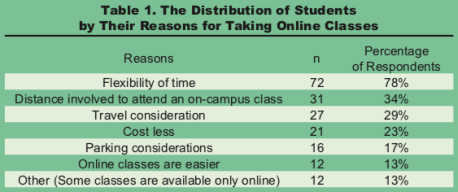
These students are often unable to attend regularly scheduled weekday classes and have busy schedules that require them to do their work in random pockets of time. For example, a peek at my schedule!
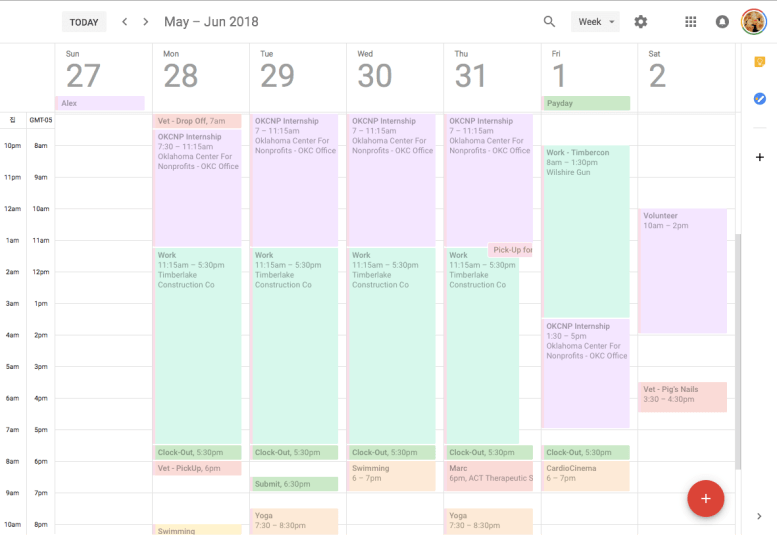
If an online class lacks this flexibility, this freedom, it loses the primary reason most students choose online classes to begin with. So flexibility, particularly the level of flexibility, is an extremely important part of whether or not an online class is good.
 Class On-The-Go